Feel Supported, Grounded, and Calm
Your personalized AI companion helps you understand yourself and turn
insights into real change.
Connect with Aura



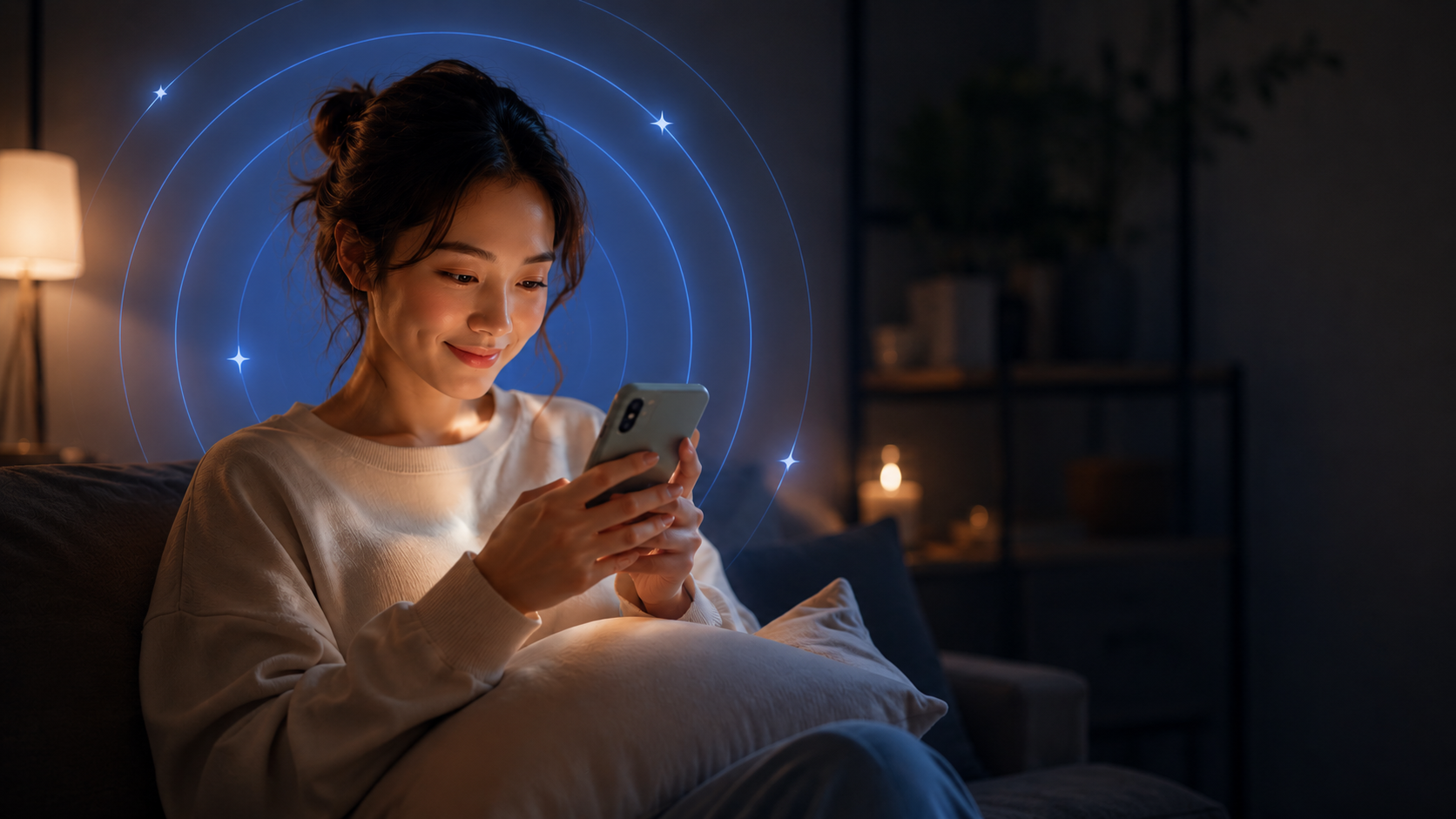
Aura isn't a static tool. It's a companion that builds a clearer picture of you over time, and gets more useful the more you use it.
Most apps work the same way on day one as they do on day one hundred. You open them, you do the thing, you close them. They don't change based on what you've shared.
Aura is different. The more you use it, the more it actually knows you.
Every time you talk to Aura, check in with Pulse, or work through something in one of its features, it builds context.
Not to store data for data's sake. To understand you better.
When you choose to save your history, Aura keeps track of the things that keep coming up: the people who appear in your conversations, the patterns in how you feel across different days and situations, the things you've been working toward. Over time, it can connect those threads in ways a single conversation never could.
The more features you use, the richer the picture becomes.
A Pulse check-in tells Aura how you're feeling today. A Free Thought session tells it what's been sitting in the back of your mind. A Knot Untangler session tells it what got heavy this week. A Connection Compass tells it which relationship has been weighing on you and why.
None of these in isolation tells the full story. Together, they do.
That's why your Weekly Insight gets more useful over time too. In week one, Aura doesn't have much to synthesize. By week six, it has enough to notice patterns you haven't consciously named yet.
When you first open Aura, the experience is intentionally gentle. It doesn't ask for much. It meets you where you are.
That simplicity isn't a limitation. It's the starting point.
What Aura becomes for you depends on what you bring to it. Users who check in regularly, who explore different features when something comes up, and who let themselves say the thing they'd usually keep to themselves, find that Aura starts to feel less like an app and more like something that actually knows them.
That's not a coincidence. It's how it's designed.
Ready to let it learn? Open Aura and start wherever you are.